
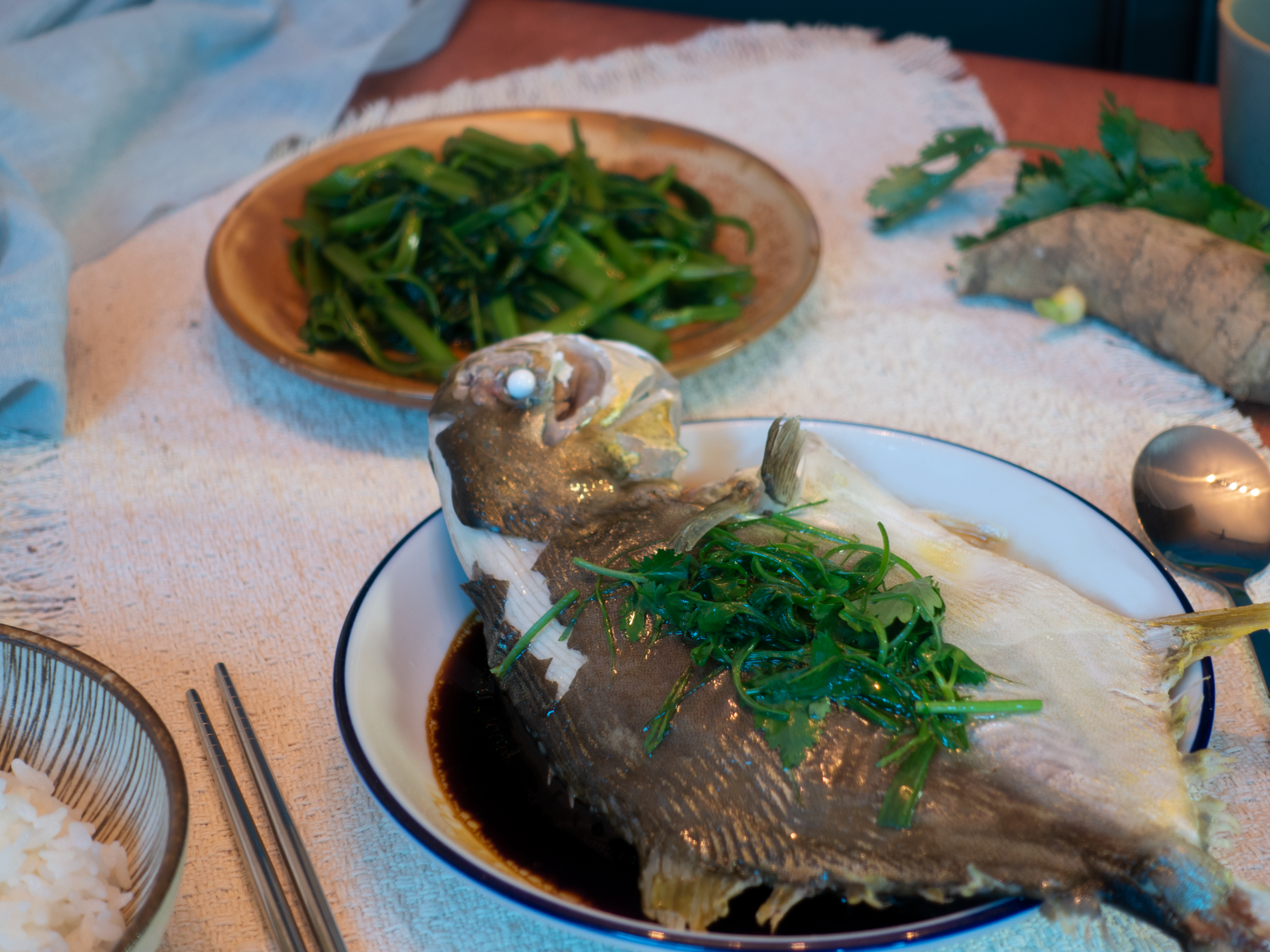
Cantonese Steamed Fish
For the first post of this blog, I want to share a dish that has a very special place in my heart. Since I was a child, this fish has been a staple on my family table, at times of celebrations and everyday dinners. It is my favourite dish, and it really showcases the excellent seafood we have in Hong Kong. In fact, steaming is the preferred way of cooking fish in Hong Kong because it highlights the freshness of fish in the region. In this recipe, I will show you how to make Cantonese steamed fish, so you can also share this piece of culture with your family and friends.
What Fish Can I Use For Cantonese Steamed Fish?
You mainly want to use fish that is fresh, if you can’t get fresh fish, high-quality frozen fillets also work for this recipe. Please do not use fish that isn’t fresh, because whilst steaming highlights the freshness of fish, it also amplifies any off-flavours.
In fact, living in Hong Kong allows me to buy fish from the market that are still swimming. Here’s a picture of the fish shop 5 minutes away from where I live.
You can use most types of white fish for this recipe, a medium-sized fish such as sea bass, small turbots, breams or rockfish are solid choices for this recipe.
However, there are some fish that I would recommend against for this recipe:
- Freshwater fish (Because of its muddy flavour)
- Tuna
- Salmon
- Small fish (such as sardines)
The Main Components Of This Dish
This is a very basic recipe that includes minimal preparation and only 2 components, including:
- Steamed Fish
- Aromatic Soy Sauce
- Scallion Oil
Steamers
Don’t worry if you don’t own a steamer. In fact, I don’t own a steamer either!
I use a wok, a large pot or a Dutch oven instead. Here’s how:
- Pour water into your pot or wok
- Get something to raise your plate from the bottom of the pot. I use this thing, but you can see what works around you.
- After the water boils, place your dish on top of the rack and voilà, you have yourself a makeshift steamer.

If you have a steam oven, you can use that as well. Just turn the setting to as high as possible and check the doneness with a chopstick or a cake tester from time to time. For my steam oven, this dish takes significantly longer to cook even on high settings.
How to Make Cantonese Steamed Fish
For this recipe, I will be using a pompano that weighs around 400g. These fish have buttery flesh that goes well with this recipe.

First, I wash the fish to clean the residual guts, scales and blood. You want to be thorough here, as these are the sources of fishy flavours that you don’t want in your dish.
Then I season the fish with salt. If your fish isn’t very fresh, I would recommend adding a bit of white pepper here. Let it sit for 15 minutes.
While the fish is seasoning, prepare the aromatics, cut the scallions lengthwise, separating the green from the white part. Trim off the tips of the green part and cut them as fine as possible. It helps to have a sharp knife and proper technique, a slicing motion is great for this.
After that, julienne your ginger into fine matchsticks. You want them fine so that they can release their flavour during the short cooking period.

Your fish should now have its moisture drawn out by the salt. Gently pat the fish dry inside and outside using paper towels, the drier the better. Stuff the inside of the fish with half of the scallion whites and ginger.
Put the fish into your preheated steamer, wok steamer or steam oven, maintain a high heat and steam the fish until it is cooked. On my wok setup, it takes around 8 minutes.
While the fish is cooking, prepare your aromatic soy sauce. Put the following ingredients into a pot and bring to a boil:
- Light Soy Sauce
- Dark Soy Sauce
- Sugar
- Water
- Scallion whites
- Ginger
- Cilantro
- Shallot
Once it reaches a boil, take it off the heat and set it aside.

To check if the fish is cooked, insert a chopstick or a cake tester into the thickest part of the fish, not directly on the bone, about here:
If you can easily pierce your chopstick through the fish, your fish is done. Carefully pour away the water that has pooled in the dish.
Place your finely sliced scallion greens on top of the fish. If you have also prepared some cilantro, place it on top as well.
Heat up a generous tablespoon of vegetable oil till it’s smoking point, and carefully pour it on top of the scallions.
Spoon the soy sauce around the fish and enjoy!

Classic Cantonese Steamed Fish
Equipment
- 1 Steamer
Ingredients
Steamed Fish
- 1 Fish (see above for recommendations)
- 1 knob Ginger Juillened
- 1 Bunch Scallions Separate green and whites, finely slice greens into shreds
- 1 bunch Cilantro Roughly chopped
- Salt To lightly season the fish
- White Pepper (optional) Use if the fish is not very fresh or frozen
Special Soy Sauce
- 2 Tbsp Light Soy Sauce
- 1 Tbsp Dark Soy Sauce
- 1 Tbsp Sugar
- 1 Tbsp Water
- Scallion Whites From above
- Ginger From above
- Cilantro (Optional)
- Half Shallot Thinly sliced
Scallion Oil
- 2 Tbsp Vegetable oil
Instructions
Steamed Fish
- Clean the Fish, remove residual guts and scales.
- Season the fish with salt and white pepper (if using), let it sit for 15 minutes
- Heat your steamer setup to the highest setting. (see above for steamer setup guide)
- Pat the fish dry. Put half of the scallion whites and ginger inside the cavity of the fish. Place the fish on the serving dish.
- Put the fish in the steamer, for every 400g, steam for about 7 minutes.
- Check the doneness of the fish using a chopstick; if it can easily pierce through the thickest part of the flesh, the fish is done. Arrange the scallion shreds and cilantro on top of the fish.
Special Soy Sauce
- In a saucepan, add all the ingredients of the soy sauce and bring to a boil.
- Pour the soy sauce on the empty space around the place.
Scallion Oil
- In a small pan or pot, heat up 2 tablespoons of vegetable oil until it's smoking point. Quickly pour it over the scallions on top of the fish; there should be a loud sizzling sound.
To Serve
- Serve this tableside and share with guests, occasionally baste the fish with the soy sauce to improve flavour. Recommended with rice
Notes
- Like the majority of Cantonese dishes, this dish is meant to be shared on the dinner table.
- The best way to eat this dish is with white rice, the soy sauce pairs very well with the rice.
Tips On Serving This Dish
- Like the majority of Cantonese dishes, this dish is meant to be shared on the dinner table.
- The best way to eat this dish is with white rice, the soy sauce pairs very well with the rice.
Fun Cultural Facts
- For the people who live on boats, it is bad practice to flip over the fish once you finish eating one side of it because it represents flipping the boat upside down. Unless you’re sharing this with Chinese seamen, you can enjoy this dish however you’d like.
- It is customary to cook the fish whole as it symbolizes completeness and gathering, which is why it is served in wedding banquets and festivals.